Local vs National SEO: Which Strategy Fits Your Business?
You’ve invested in a website, you’re active on social media, and you know SEO matters—but should you focus on ranking in your neighborhood or competing on a national stage? This single decision can dramatically impact your marketing budget, customer acquisition costs, and overall business growth. For many South Florida business owners, the answer isn’t always obvious, and choosing the wrong path can waste thousands of dollars with little to show for it.
The truth is that local vs national SEO isn’t just about geography—it’s about understanding who your customers are, how they find you, and what makes your business profitable. Let’s break down both strategies so you can make an informed decision that drives real results for your business.
Understanding the Fundamental Differences

Local search optimization targets customers in a specific geographic area, typically within a city, county, or region. When someone in Fort Lauderdale searches “plumber near me” or “Miami wedding photographer,” local SEO ensures your business appears in those results. This strategy revolves around Google Business Profile optimization, local citations, location-specific content, and building authority within your community.
National SEO services, on the other hand, cast a much wider net. This approach aims to rank your website for keywords across the entire country, regardless of the searcher’s location. If you’re an e-commerce store selling handmade jewelry or a software company offering services nationwide, national SEO helps you compete in a broader marketplace where location doesn’t limit your customer base.
The Competition Factor
Here’s what many business owners don’t realize: national SEO typically faces 10 to 100 times more competition than local SEO. Ranking for “wedding photographer” nationally means competing against thousands of established websites, many with massive budgets and years of authority. However, ranking for “wedding photographer in Boca Raton” narrows your competition to a few dozen local businesses—a much more achievable goal for small to medium businesses.
When Local SEO Makes Perfect Sense
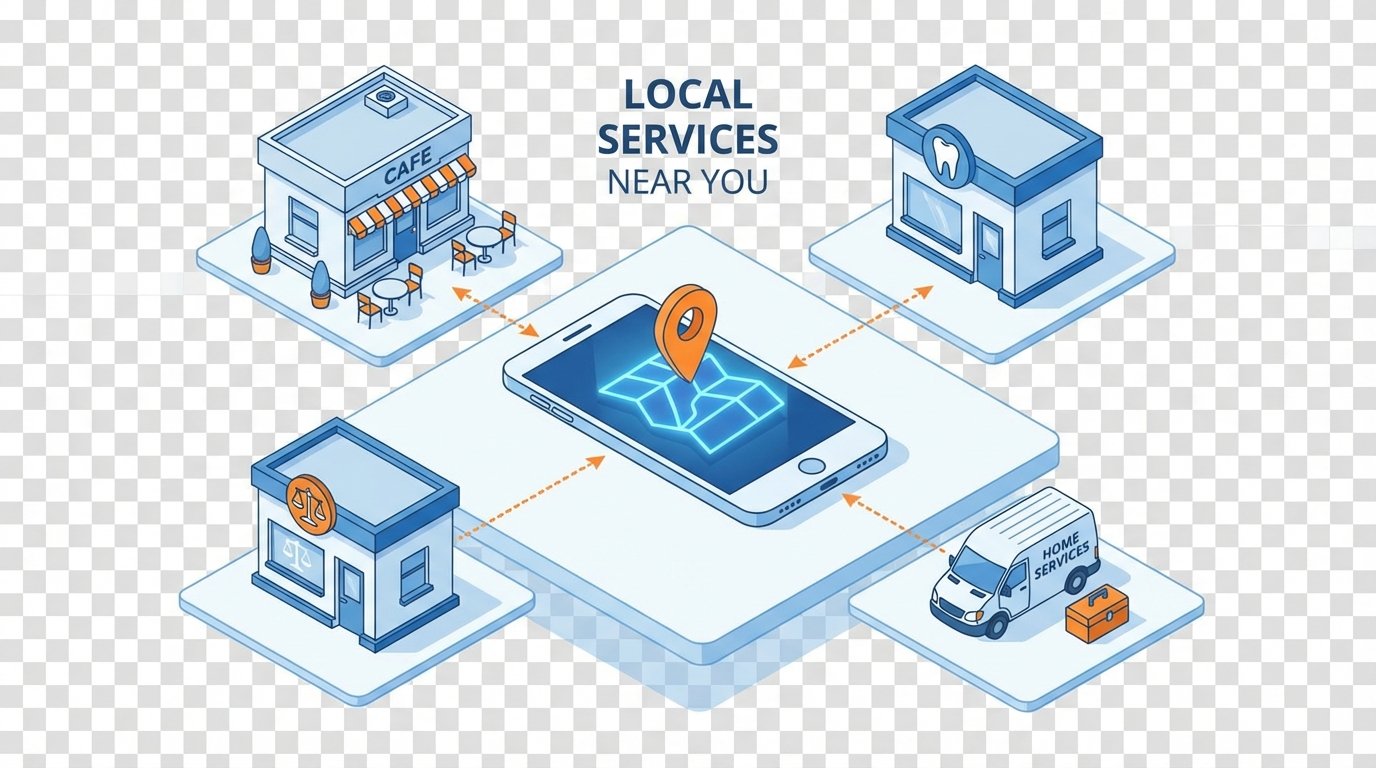
If customers need to physically visit your location or you provide services within a specific service area, local search optimization should be your primary focus. This includes:
- Restaurants, cafes, and food establishments
- Medical and dental practices
- Legal services and law firms
- Home services (plumbing, HVAC, electrical, landscaping)
- Salons, spas, and fitness studios
- Auto repair and maintenance shops
- Real estate agencies and property management
- Retail stores with physical locations
A Fort Lauderdale HVAC company we worked with in 2025 had been trying to rank nationally, spending $2,000 monthly with minimal results. When we shifted their SEO business strategy to focus exclusively on Broward and Palm Beach counties, their qualified leads increased by 340% within four months. Why? Because people need their air conditioner fixed today, not next week by someone three states away.
The Local SEO Advantage
Local search optimization offers several distinct benefits for service-based businesses. First, the conversion rates are significantly higher—someone searching for “emergency dentist near me” has immediate intent to book an appointment. Second, the cost per acquisition tends to be lower because you’re not competing against massive national brands with unlimited budgets. Third, you can build genuine community relationships that lead to referrals, reviews, and repeat business.
Google’s local pack (the map results showing the top three businesses) captures approximately 44% of clicks for local searches. If you’re not visible in that coveted space, you’re essentially invisible to potential customers searching for services in your area.
When National SEO Is the Right Choice
National SEO services become essential when your business model isn’t restricted by geography. Consider this approach if:
- You run an e-commerce store shipping products nationwide
- You offer digital services, consulting, or coaching remotely
- You’re a SaaS company or software provider
- You manufacture products sold through distributors nationally
- You create and sell online courses or digital products
- You’re building a content-based business (blogs, publications, resources)
A Miami-based online boutique selling sustainable fashion realized that limiting their SEO to South Florida meant ignoring 98% of their potential market. After implementing a national SEO strategy focusing on product-specific keywords and building authority in the sustainable fashion niche, their organic traffic grew by 425% over eight months, with customers from all 50 states.
The National SEO Challenge
Be prepared: national SEO requires more time, more content, more backlinks, and typically more budget. You’re competing against established players who have been building their online authority for years. Success requires a comprehensive seo strategy for small business that includes high-quality content creation, technical SEO excellence, strategic link building, and consistent effort over 6-12 months before seeing significant results.
The Hybrid Approach: Getting the Best of Both Worlds
Many businesses don’t need to choose exclusively between local vs national seo—they can benefit from both. Consider a specialty law firm in West Palm Beach that handles personal injury cases. They want strong local visibility for walk-in clients and immediate needs, but they also accept cases from across Florida and even nationally for specific practice areas.
The hybrid approach involves optimizing your Google Business Profile and local citations while simultaneously building content and authority for broader keywords. This strategy works particularly well for:
- Multi-location businesses with several offices
- Service businesses that travel to clients (contractors, mobile services)
- Professional services with both local and remote clients
- Retailers with physical stores and e-commerce capabilities
Evaluating Your Business Model and Resources
Making the right choice between local and national SEO starts with honest assessment. Ask yourself these critical questions:
Where do your customers come from? Review your sales data from the past year. What percentage of revenue comes from local customers versus those outside your immediate area? If 80% of your business is within 25 miles, local SEO should dominate your strategy.
What’s your realistic budget? Local SEO campaigns typically range from $750-$2,500 monthly for small to medium businesses, while national SEO often requires $2,500-$10,000+ monthly to compete effectively. Understanding your budget constraints helps determine which strategy is feasible.
How quickly do you need results? Local SEO generally produces visible results in 3-6 months, while national SEO often requires 6-12 months or longer. If you need leads within 90 days, local search optimization offers a faster path to ROI.
What’s your competition doing? Research competitors who are successfully attracting customers. Are they ranking locally or nationally? What keywords appear in their content? This competitive intelligence reveals what’s working in your specific industry.
Building Your SEO Business Strategy
Once you’ve determined whether local, national, or hybrid SEO fits your business, implementation becomes crucial. Here’s how to approach each strategy effectively:
For Local SEO Success
Start by claiming and optimizing your Google Business Profile with accurate information, regular posts, and high-quality photos. Ensure your NAP (name, address, phone number) is consistent across all online directories. Create location-specific content that addresses local customer needs and questions. Actively encourage satisfied customers to leave Google reviews, as these significantly impact local rankings. Build relationships with other local businesses for natural backlink opportunities.
For National SEO Success
Develop comprehensive content targeting informational keywords in your industry. Focus on building domain authority through strategic link building from reputable national websites. Ensure your technical SEO foundation is solid—fast loading speeds, mobile optimization, and clean site architecture. Create cornerstone content that positions you as an industry authority. Invest in ongoing content creation that targets various stages of the buyer’s journey.
Common Mistakes That Waste Money
The biggest mistake we see South Florida business owners make is trying to do both strategies half-heartedly with insufficient resources. A Delray Beach restaurant owner once came to us after spending $1,800 monthly for a year on “comprehensive SEO” that tried to rank them both locally and nationally. The result? They weren’t ranking well for either. We refocused entirely on local search within a 15-mile radius, and within five months, they were in the local pack for their primary keywords, generating 50+ reservation calls weekly.
Another common error is choosing national SEO when the business model doesn’t support it. A Coral Springs carpet cleaning company wanted to “dominate the internet,” but their service area was limited to 30 miles from their location. National rankings would have attracted interest from customers they couldn’t serve—useless traffic that never converts.
Measuring Success and Adjusting Strategy
Regardless of which approach you choose, tracking the right metrics determines whether your investment is paying off. For local SEO, monitor Google Business Profile views, direction requests, phone calls, local pack rankings, and reviews. For national SEO, track organic traffic growth, keyword rankings for target terms, conversion rates, and revenue from organic search.
The most important metric isn’t rankings—it’s ROI. Are you generating more qualified leads? Is your cost per acquisition decreasing? Are customers finding you organically instead of through paid ads? These business outcomes matter far more than vanity metrics like domain authority or total keyword rankings.
Making Your Decision
The choice between local vs national seo ultimately depends on your business model, customer location, budget, and growth goals. Local businesses serving specific geographic areas should prioritize local search optimization for faster results and higher conversion rates. E-commerce and remote service businesses benefit from national SEO despite the increased competition and longer timeline. Many businesses can strategically blend both approaches when their model supports it.
What matters most is choosing a strategy aligned with how your customers actually find and buy from you. Don’t let ego or competitor envy drive your decision—let data and business fundamentals guide you toward the approach that delivers measurable results.
At UltraWeb Marketing, we’ve helped dozens of South Florida businesses navigate this exact decision. Whether you’re a Fort Lauderdale boutique, a Miami-based e-commerce store, or a West Palm Beach service provider, we create customized SEO strategies that match your business reality—not some one-size-fits-all template. We take the time to understand your customers, analyze your competition, and build a roadmap that generates real leads and revenue, not just traffic.
Ready to stop guessing and start growing? Let’s have a conversation about which SEO strategy actually fits your business. Contact UltraWeb Marketing today for a free consultation, and we’ll create a clear, actionable plan that turns search visibility into paying customers.
Frequently Asked Questions
How long does it take to see results from local SEO versus national SEO?
Local SEO typically produces visible results within 3-6 months, including improved Google Business Profile visibility and local pack rankings. National SEO requires more patience, usually taking 6-12 months or longer to see significant organic traffic and ranking improvements due to higher competition and broader keyword targets.
Can a small business with a limited budget compete in national SEO?
While possible, it’s challenging and requires a very focused approach. Small businesses with limited budgets typically see better ROI focusing on local SEO or targeting specific long-tail keywords nationally rather than competing for broad, high-volume terms dominated by major brands. Starting with less competitive niches allows gradual authority building.
Should I focus on local SEO if I offer services both locally and nationwide?
Yes, implement a hybrid strategy. Prioritize local SEO for your primary service area since it converts faster and costs less, then gradually expand to national keywords as your budget allows. Create location-specific pages for local rankings while developing broader content for national visibility.
What’s more expensive: local or national SEO services?
National SEO is significantly more expensive, typically ranging from $2,500-$10,000+ monthly due to higher competition, more extensive content needs, and aggressive link building requirements. Local SEO campaigns generally cost $750-$2,500 monthly, making it more accessible for small to medium businesses with tighter budgets.
How do I know if my business needs local or national SEO?
Analyze where your customers are located and whether they need to visit you or you need to serve them physically. If most customers are within 25 miles or require in-person service, prioritize local SEO. If you ship products nationwide or offer remote services without geographic limitations, national SEO makes more sense.