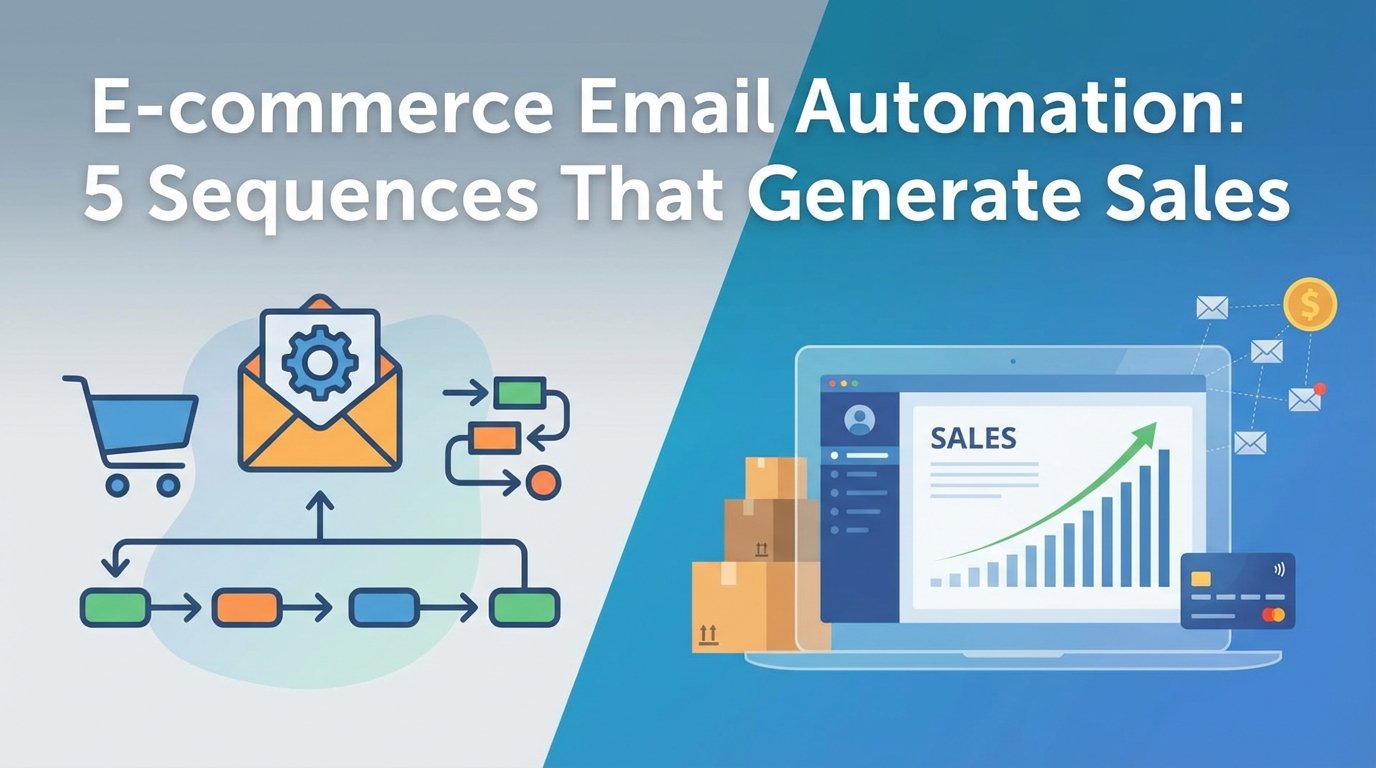
E-commerce Email Automation: 5 Sequences That Generate Sales
Email marketing delivers an average ROI of $42 for every dollar spent, making it one of the most profitable channels for online retailers. Yet many South Florida e-commerce business owners leave money on the table by sending only promotional blasts instead of leveraging automated email campaigns that work around the clock to convert browsers into buyers.
If you’re running an online store and manually sending every email, you’re working harder than necessary while missing crucial sales opportunities. Ecommerce email automation allows you to deliver the right message to the right customer at exactly the right moment—without lifting a finger after the initial setup.
Let’s explore five essential automated email sequences that consistently generate sales for e-commerce businesses, with practical implementation strategies you can apply to your own store today.
Why Email Automation Matters for Online Stores

Before diving into specific sequences, it’s important to understand why email marketing for online stores has evolved beyond simple newsletters. Today’s customers expect personalized experiences based on their behavior, preferences, and purchase history.
Automated email campaigns respond to customer actions in real-time, creating relevant touchpoints that manual email marketing simply cannot match at scale. A customer abandons their cart at 2 AM? Your automation sends a reminder within an hour. Someone makes their first purchase? They automatically receive a welcome sequence that builds loyalty.
This level of responsiveness drives measurable results. Automated emails generate 320% more revenue than non-automated emails, according to recent industry data. For small to medium-sized online retailers, this technology levels the playing field against larger competitors.
Sequence #1: The Abandoned Cart Email Series

Nearly 70% of online shopping carts are abandoned before purchase completion. An abandoned cart email sequence is your second chance to recover these lost sales, and it’s often the highest-performing automation you’ll implement.
How to Structure Your Abandoned Cart Sequence
Email #1 (Send after 1 hour): A friendly reminder that items are still waiting in their cart. Keep the tone helpful rather than pushy. Include product images, clear descriptions, and a prominent “Complete Your Purchase” button. Subject line example: “You left something behind!”
Email #2 (Send after 24 hours): Address common objections. Include customer reviews, highlight your return policy, showcase security badges, and answer frequently asked questions. This email builds trust and removes purchase barriers. Subject line example: “Still interested? Here’s what our customers say…”
Email #3 (Send after 48-72 hours): Your final nudge, potentially including an incentive like free shipping or a small discount. Only use discounts if necessary for your business model—many carts convert without them. Subject line example: “Last chance: Your cart expires soon”
A Miami-based boutique jewelry store implemented this three-email sequence and recovered 18% of abandoned carts within the first month, adding over $12,000 in previously lost revenue.
Sequence #2: Welcome Series for New Subscribers
When someone joins your email list, they’re most engaged with your brand. A welcome series capitalizes on this peak interest to build relationships and drive first-time purchases.
Building an Effective Welcome Sequence
Email #1 (Immediate): Deliver any promised incentive (discount code, free guide, etc.) and set expectations for future emails. Introduce your brand story and what makes you different. Include your best-selling products or categories.
Email #2 (2-3 days later): Provide value through educational content, styling tips, buying guides, or customer success stories. Position yourself as an expert resource, not just a seller.
Email #3 (5-7 days later): Create urgency around that welcome discount if unused, or highlight new arrivals and popular products. Include social proof through reviews and testimonials.
Welcome emails generate 320% more revenue per email than other promotional emails, making this sequence essential for every online store.
Sequence #3: Post-Purchase Follow-Up Series
The relationship shouldn’t end after the sale. Post-purchase automated email campaigns increase customer lifetime value by encouraging repeat purchases, gathering reviews, and reducing buyer’s remorse.
Maximizing Post-Purchase Engagement
Email #1 (Immediately after purchase): Order confirmation with clear details about what happens next. Set delivery expectations and provide tracking information when available. This transactional email has the highest open rate of any email type.
Email #2 (After delivery): Check that everything arrived in perfect condition. Ask for feedback and make it easy to contact support if needed. This shows you care about their experience beyond the transaction.
Email #3 (1-2 weeks after delivery): Request a product review with a direct link to leave feedback. Consider offering entry into a monthly drawing or small incentive. Reviews build social proof that drives future sales.
Email #4 (3-4 weeks after delivery): Recommend complementary products based on their purchase. If they bought running shoes, suggest moisture-wicking socks or a fitness tracker. Use purchase history to make genuinely relevant suggestions.
A Fort Lauderdale-based supplement company implemented this sequence and saw their repeat purchase rate increase by 34% within three months while building a library of authentic customer reviews.
Sequence #4: Browse Abandonment Campaign
Not every visitor adds items to their cart, but that doesn’t mean they’re not interested. Browse abandonment emails target visitors who viewed specific products or categories but didn’t take the next step.
Converting Window Shoppers into Buyers
Email #1 (Send after 24 hours): Remind them about the products they viewed with high-quality images. Include a brief benefit-focused description and customer ratings. Subject line example: “Still thinking about these?”
Email #2 (Send after 3-4 days): Provide additional information like size guides, styling suggestions, or comparison charts. Address potential questions that might have prevented immediate purchase.
While browse abandonment emails typically convert at lower rates than cart abandonment sequences, they capture a much larger audience. Many online stores see 5-8% conversion rates from browse abandonment campaigns, turning invisible window shoppers into measurable revenue.
Sequence #5: Re-engagement (Win-Back) Campaign
Customers naturally drift away over time, but re-engagement automated email campaigns can revive inactive subscribers before they completely forget about your brand.
Winning Back Inactive Customers
Email #1 (After 60-90 days of inactivity): A friendly “we miss you” message highlighting what’s new since their last visit. Showcase new products, improvements, or features they haven’t seen.
Email #2 (If no engagement after 2 weeks): Offer a special “welcome back” incentive—typically a discount or free shipping. Make them feel valued as a returning customer.
Email #3 (Final attempt): Ask if they still want to receive emails. Give them preference options to receive fewer emails or different content rather than unsubscribing completely. If no response, remove them from regular campaigns to protect your sender reputation.
Keeping your email list healthy by removing consistently unengaged subscribers actually improves email conversion rates by ensuring your messages reach people who want them.
Best Practices for E-commerce Email Automation Success
Implementing these sequences is just the beginning. Follow these proven practices to maximize results:
- Segment ruthlessly: Don’t send the same messages to everyone. Segment by purchase history, browsing behavior, location, and engagement level for more relevant messaging.
- Mobile optimization is mandatory: Over 60% of emails are opened on mobile devices. Every email must look perfect on smartphones with readable text, tappable buttons, and fast-loading images.
- Test subject lines consistently: Subject lines determine whether emails get opened. Test different approaches—questions, urgency, curiosity, personalization—and track what resonates with your audience.
- Monitor key metrics: Track open rates, click-through rates, conversion rates, and revenue per email. Use this data to continuously refine your sequences.
- Maintain consistent brand voice: Your automated emails should sound like they come from a real person at your company, not a generic robot. Inject personality and authenticity.
- Keep your email list clean: Regularly remove hard bounces and consistently unengaged subscribers to maintain strong deliverability and sender reputation.
Getting Started with Email Automation
The prospect of setting up multiple automated sequences might feel overwhelming, but you don’t need to launch everything simultaneously. Start with the abandoned cart email sequence—it typically delivers the fastest ROI and proves the value of automation to your business.
Most modern email platforms like Klaviyo, Omnisend, or Mailchimp provide templates and workflows that make setup easier than you might expect. The initial investment of time pays dividends for months and years to come as these sequences work continuously in the background.
For South Florida e-commerce businesses competing in crowded markets, email automation provides a competitive advantage that compounds over time. While competitors manually send occasional promotional blasts, your automated sequences nurture relationships, recover lost sales, and drive repeat purchases automatically.
Transform Your Email Marketing Strategy
Ecommerce email automation isn’t about replacing the personal touch—it’s about scaling it. These five sequences allow you to deliver personalized, timely messages to hundreds or thousands of customers with the same care you’d give to a handful of email conversations.
The online retailers seeing the strongest growth in 2026 aren’t necessarily those with the biggest advertising budgets. They’re the ones who’ve mastered automated communication that guides customers through every stage of the buying journey.
Ready to implement email automation that actually generates sales for your online store? UltraWeb Marketing specializes in helping South Florida e-commerce businesses build and optimize email marketing systems that deliver measurable ROI. We handle the technical setup, copywriting, and ongoing optimization so you can focus on running your business while your email marketing works around the clock. Contact us today to discuss how automated email campaigns can transform your online store’s revenue.
Frequently Asked Questions
How quickly can I expect results from email automation?
Most e-commerce businesses see results from abandoned cart sequences within the first week of implementation. Welcome series and post-purchase campaigns build momentum over 30-60 days as more customers enter the sequences. The key is that once set up, these automations continue generating sales indefinitely with minimal ongoing effort.
What’s a good conversion rate for abandoned cart emails?
Industry benchmarks show that well-optimized abandoned cart email sequences recover between 10-15% of abandoned carts. Some businesses achieve recovery rates above 20% with strong sequences. Even at the conservative end, recovering 10% of abandoned carts typically represents thousands of dollars in recaptured revenue for most online stores.
Do I need expensive email software to set up automation?
Not necessarily. Most email platforms offer automation features at various price points. Entry-level plans from providers like Mailchimp start around $20-30 monthly and include basic automation. As your list grows and you need more sophisticated segmentation, you might upgrade to platforms like Klaviyo. The ROI from automation typically far exceeds the software cost.
How often should I update my automated email sequences?
Review your automated sequences quarterly to refresh product recommendations, update seasonal references, and refine messaging based on performance data. However, well-written evergreen sequences can run for months without changes. Focus on testing subject lines and calls-to-action rather than completely rewriting sequences unless performance declines.
Can email automation work for small online stores with limited products?
Absolutely. Even stores with small catalogs benefit tremendously from abandoned cart recovery, welcome series, and post-purchase follow-ups. These sequences focus on customer relationships and completing purchases rather than showcasing massive product ranges. Many niche stores with under 50 SKUs see excellent results from email automation.