

Inventory management integration: Boost 2025 Profit
Inventory Management Integration for Boca Raton Businesses by UltraWeb Marketing
If you’re tracking inventory with spreadsheets or manually updating stock levels across different platforms, you’re losing time and money. Every time a customer sees an item listed as available that’s actually out of stock, you risk losing that sale and their trust. This is a common problem for businesses, but it’s entirely preventable.
Inventory management integration is the solution. It connects your inventory system with other critical business software—like your e-commerce platform, POS system, and accounting tools—so they automatically share data in real-time. Instead of manual updates, integration creates a single source of truth that keeps everything synchronized.
What Inventory Management Integration Does:
- Automates data flow between your inventory system and other business tools.
- Eliminates manual data entry and reduces human error.
- Provides real-time stock updates across all sales channels.
- Prevents overselling by syncing stock levels instantly.
- Streamlines order fulfillment from purchase to delivery.
Stockouts cost retailers billions annually. Discrepancies between your accounting software and what’s on your shelves are symptoms of disconnected systems holding your business back. Businesses that integrate their systems can significantly reduce stock errors and cut order processing times from hours to minutes.
I’m Damon Delcoro, founder and CEO of UltraWeb Marketing. We grew our own e-commerce business to over $20 million annually by implementing the seamless system integrations we now offer to our clients. Throughout this guide, I’ll show you how to connect your systems for the same kind of changeal results.
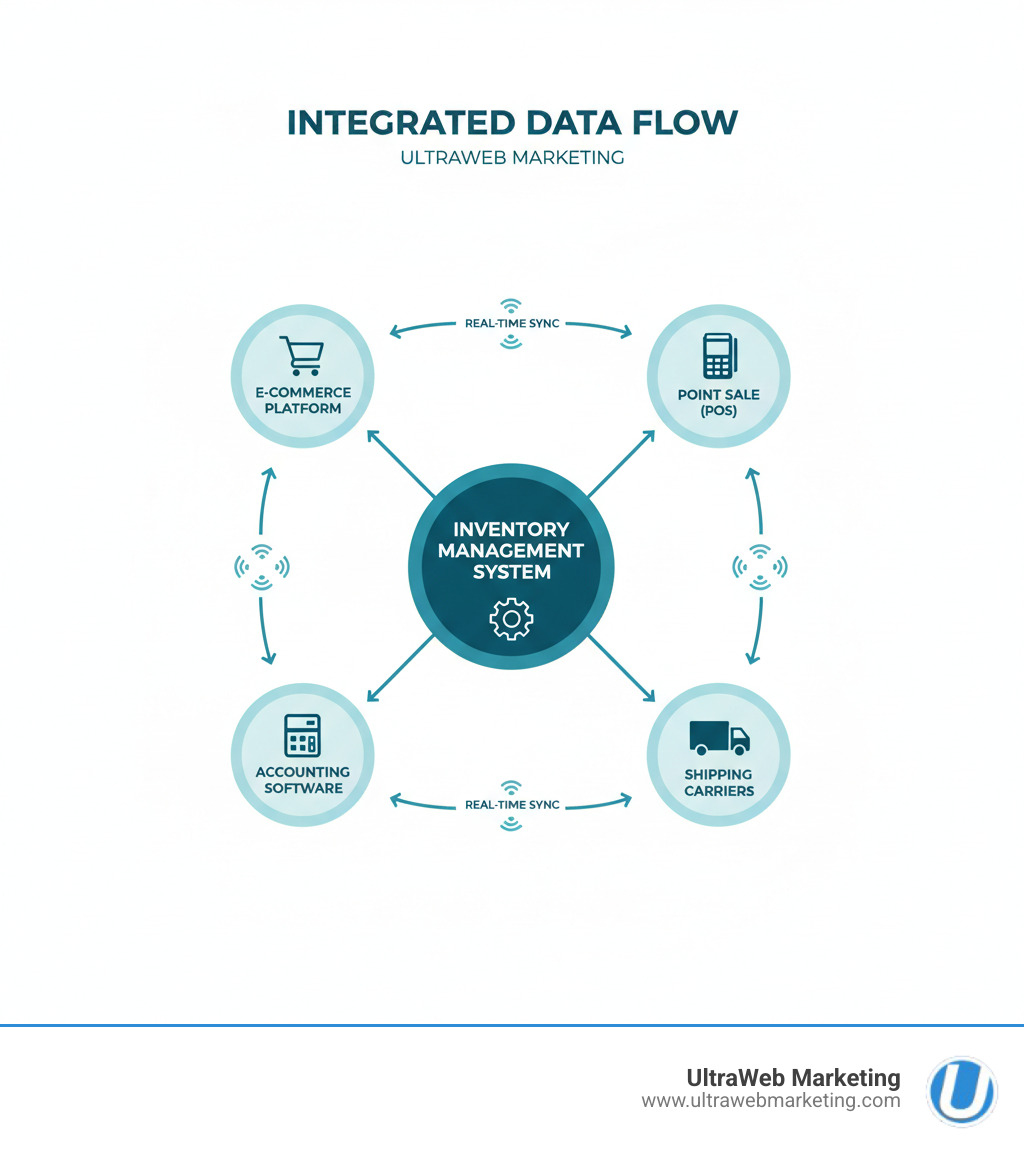
Why Inventory Management Integration is a Game-Changer for Your Business
Running a business today without connected systems is like trying to conduct an orchestra where none of the musicians can hear each other. For businesses competing in the e-commerce landscape—whether you’re in Boca Raton, Delray Beach, or anywhere across South Florida—integration isn’t a luxury. It’s the difference between thriving and surviving.
Integration transforms chaos into harmony. Your inventory system talks directly to your sales channels, accounting software, and warehouse partners in real-time. The cost of disconnected systems is staggering, with stockouts leading to billions in lost sales each year. The good news? Businesses that implement proper inventory integration can reduce stock errors by up to 30%, leading to fewer angry customers and fewer headaches for your team.

At UltraWeb Marketing, we’ve helped businesses across South Florida implement expert e-commerce solutions that make this level of integration possible, turning struggling operations into profitable, efficient machines.
The Core Benefits of an Integrated System
Integration delivers dozens of victories that transform your business.
- Automation: Instantly update inventory counts, trigger reorders, and inform your warehouse and accounting software of sales. This saves hours daily and eliminates the human errors that plague manual processes.
- Error Reduction: By removing manual data entry, you eliminate typos and copy-paste mistakes, ensuring your inventory counts, order processing, and financial reporting stay accurate.
- Optimized Stock Levels: With real-time visibility, you can maintain the right amount of inventory—not too much capital tied up in slow-moving products, and not too little causing expensive stockouts.
- Capital Efficiency: When you’re not over-ordering, you free up working capital that can fuel growth in other areas like marketing or product expansion.
- Supply Chain Visibility: Track inventory in real time from supplier to customer, spotting bottlenecks before they become disasters.
- Accurate Financial Reporting: Your inventory value is always accurate on your balance sheet, giving you a true picture of your profitability.
- Compliance: Connected systems make it dramatically easier to meet tax requirements and industry-specific reporting standards.
How Integration Improves the Online Customer Experience
Your customers don’t care about your backend systems, but they reap the benefits of a well-integrated operation.
- Accurate Stock Levels Online: Prevents the frustrating experience of a customer ordering an out-of-stock item. What they see is what you have.
- Preventing Overselling: Systems sync instantly across all channels, so you never accidentally sell the same product twice.
- Fewer Backorders: Better stock management and automated reordering mean customers get what they want without long waits.
- Real-Time Order Status: Provide customers with accurate tracking from purchase to delivery, building trust and reducing “where’s my order?” inquiries.
- Faster Fulfillment: With accurate data and streamlined workflows, orders move from “processing” to “shipped” in record time.
- Increased Customer Trust: Consistently delivering on your promises—accurate stock, fast shipping, and clear communication—builds loyalty and drives repeat business.
To make the most of these advantages, you need a solid digital foundation. Our team specializes in creating powerful e-commerce SEO strategies and robust e-commerce platforms that make seamless integration possible.
Key Systems to Connect for a Unified Operation
To open up the power of inventory management integration, you must connect your inventory system to the other critical tools that power your business. Think of your inventory system as the central hub that coordinates your sales channels, accounting software, and warehouse operations. When these systems work together, you eliminate manual data entry and the constant firefighting that comes with disconnected tools.
Let’s look at the specific integrations that will transform how your business operates, especially if you’re competing in the South Florida market.
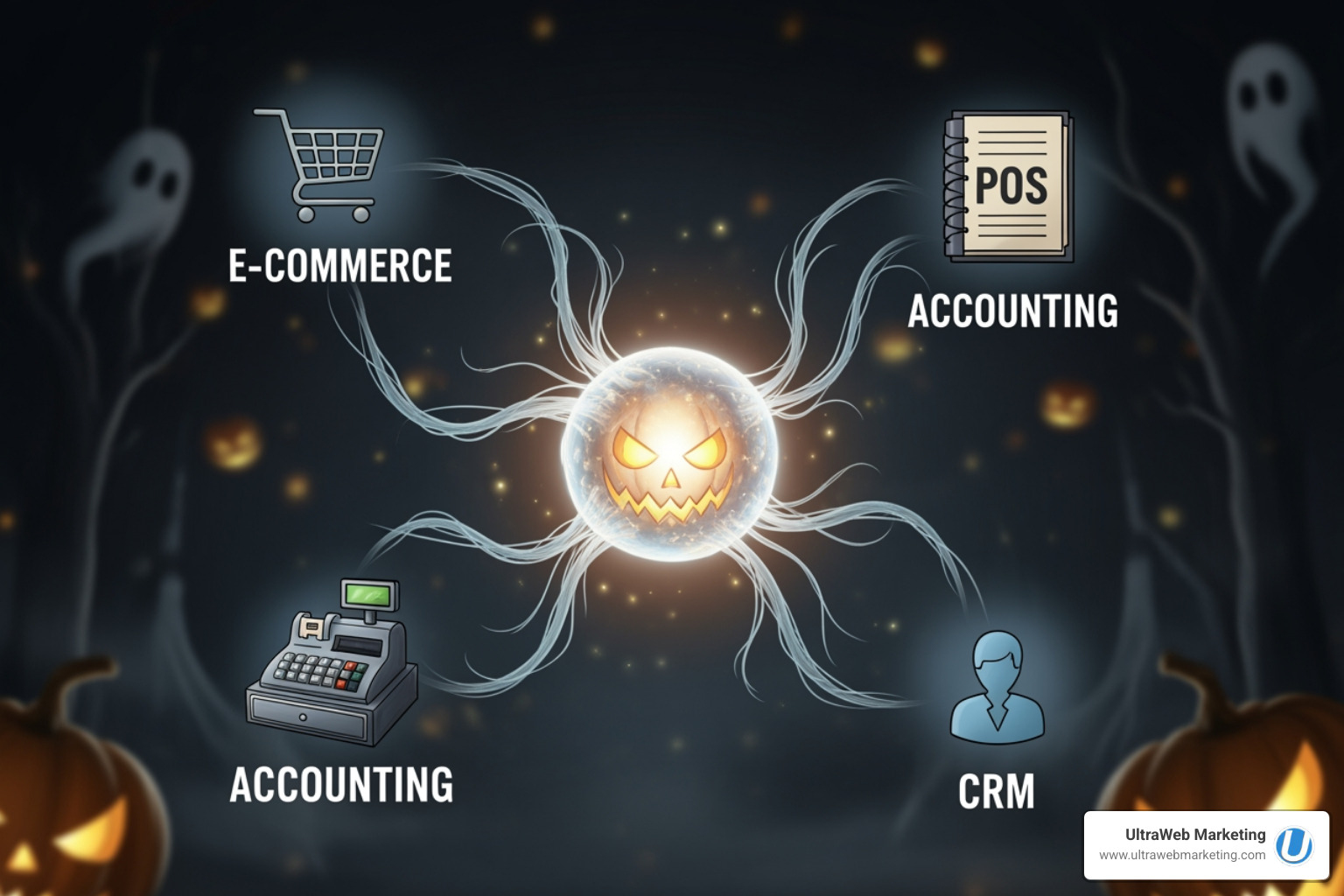
E-commerce and Point of Sale (POS) Integration
If you sell products both online and in a physical location—like a boutique in Delray Beach or a retail store in Boca Raton—connecting your e-commerce platform and POS system is essential. This integration creates a unified view of your sales and inventory across all channels.
When a product sells online, your in-store inventory count updates instantly, and vice-versa. This real-time synchronization prevents overselling and disappointing customers. It also enables a cohesive omnichannel experience, allowing customers to check stock online before visiting your store or to buy online and pick up in-store. At UltraWeb Marketing, we offer custom Delray Beach e-commerce web design built with this crucial integration in mind.
Accounting and Financial Reporting Integration
Integrating your accounting software with your inventory system transforms how you understand your profitability. The most immediate benefit is eliminating manual data entry, as every sale, purchase order, and stock adjustment automatically flows into your accounting system.
This means your Cost of Goods Sold (COGS) is calculated automatically, giving you a real-time view of profitability. Your balance sheet reflects the true value of your stock, and your income statement shows the true cost of products sold. This accuracy is invaluable for making strategic decisions and simplifies tax compliance, saving you from scrambling to reconcile discrepancies.
CRM and Warehouse Management (WMS) Integration
For exceptional customer service and efficient warehouse operations, integrate your Customer Relationship Management (CRM) and Warehouse Management System (WMS).
Connecting your CRM gives your sales team real-time stock availability, preventing them from promising products that are out of stock. For your customer service team, it provides instant access to order status and shipping information, allowing them to answer questions confidently.
A WMS integration is changeal for businesses with dedicated warehouses. Every stock movement is tracked, dramatically improving inventory accuracy. This leads to better order fulfillment accuracy, as integrated systems guide staff through optimized picking routes. It also streamlines shipping logistics by automating label generation and tracking updates, allowing you to scale your operations efficiently.
Choosing Your Path: Strategy and Features for Success
Deciding to integrate your inventory management is a significant step, but choosing the right strategy is crucial. You need a solid blueprint before you start, or you’ll end up with a system that doesn’t meet your needs.

Must-Have Features for Seamless Inventory Management Integration
When evaluating systems, prioritize these key features:
- Real-Time Synchronization: Non-negotiable. Your system must update inventory levels across all platforms the instant a transaction occurs.
- Multi-Channel & Multi-Location Support: Essential for businesses with a website and physical stores, like those in Boca Raton and Delray Beach. Manage all inventory from a single dashboard.
- Robust Reporting & Analytics: Go beyond simple tracking. Use data on sales trends and inventory turnover to make smarter business decisions.
- Scalability for Growth: Choose a system that can handle your business as it doubles or triples in size, accommodating more products and sales channels.
- Open API for Custom Connections: An Application Programming Interface (API) provides the flexibility to connect with specialized software unique to your industry.
- Barcode and RFID Scanning: These features dramatically increase efficiency and accuracy in receiving, picking, and counting stock.
Overcoming Common Challenges in Inventory Management Integration
The journey to integration has potential problems, but preparation is key.
- Data Silos: Different departments hoarding data can prevent integration. The solution is a unified system that acts as a central hub for all inventory information.
- System Compatibility: Not all software plays nicely together. Research how well a new system integrates with your existing tech stack (e-commerce, POS, accounting) before committing.
- Inaccurate Data Cleanup: Integrating messy data creates an integrated mess. Audit your current stock, standardize SKUs, and reconcile discrepancies before you migrate.
- Implementation Costs and ROI: Integration has upfront costs. Conduct a cost-benefit analysis, focusing on long-term savings from fewer errors, optimized stock, and improved efficiency.
- Staff Training and Adoption: A new system requires new processes. Invest in comprehensive training to ensure your team understands the “why” behind the change, which encourages adoption.
- Choosing the Right Implementation Partner: This can make or break your project. You need a partner who understands both technology and business operations. At UltraWeb Marketing, we know that a solid e-commerce development plan is your first step toward creating an integrated system that works for your unique needs.
Frequently Asked Questions about Inventory Integration
What’s the difference between inventory management and warehouse management?
Think of it this way: inventory management is the “what” and “how much.” It tracks product quantities and financial value across all your locations and sales channels. It’s strategic. Warehouse management (WMS) is the “where” and “how.” It manages the physical movement and storage of goods within your warehouse—picking, packing, and shipping. It’s operational. When integrated, they create maximum efficiency.
How does inventory integration improve financial reporting?
Integration automates the flow of data between your sales channels and your accounting software. This eliminates manual data entry and the errors that come with it. Your Cost of Goods Sold (COGS) is updated in real-time, and your financial reports always reflect the true value of your inventory. This gives you an accurate, up-to-the-minute view of your profitability and makes tax compliance much simpler.
Can small businesses in South Florida benefit from inventory integration?
Absolutely. In fact, small businesses in competitive markets like Boca Raton and Delray Beach often benefit the most. Integration allows you to:
- Compete with Larger Companies: Operate with the same efficiency and offer a seamless customer experience with accurate stock levels and fast shipping.
- Protect Your Capital: Prevent lost sales from stockouts and avoid tying up cash in slow-moving inventory.
- Save Valuable Time: Automate tedious manual tasks, freeing you up to focus on activities that actually grow your business.
For a small business, a strong reputation is invaluable. By fulfilling orders quickly and accurately, you build customer loyalty that spreads through word-of-mouth in local communities.
Build Your Foundation for Growth with UltraWeb Marketing
You’ve seen how inventory management integration can transform your business, but it all starts with a robust, scalable e-commerce website. Your website is the central hub where your inventory, POS, and accounting systems communicate. If it isn’t built for integration, your entire operation can suffer.
At UltraWeb Marketing, we’ve spent over a decade helping businesses across Boca Raton, Delray Beach, and South Florida build the digital foundations they need to succeed. We specialize in creating e-commerce websites designed for growth—sites architected from the ground up to support powerful integrations and scale with your ambitions. We ensure your platform can seamlessly connect with your inventory system, payment processors, and shipping partners.
Our online marketing plans start as low as $279 per month, giving you access to a full team of experts who understand the entire digital landscape. We don’t just build websites; we build platforms for sustainable growth.
Ready to stop letting a disconnected website hold your business back? Contact UltraWeb Marketing today for a free consultation. Let’s build an e-commerce platform that unifies your systems and helps your business thrive online.