

Website design for ecommerce: Master 8 Tips
Ecommerce Website Design in Boca Raton by UltraWeb Marketing: Boost Your Sales
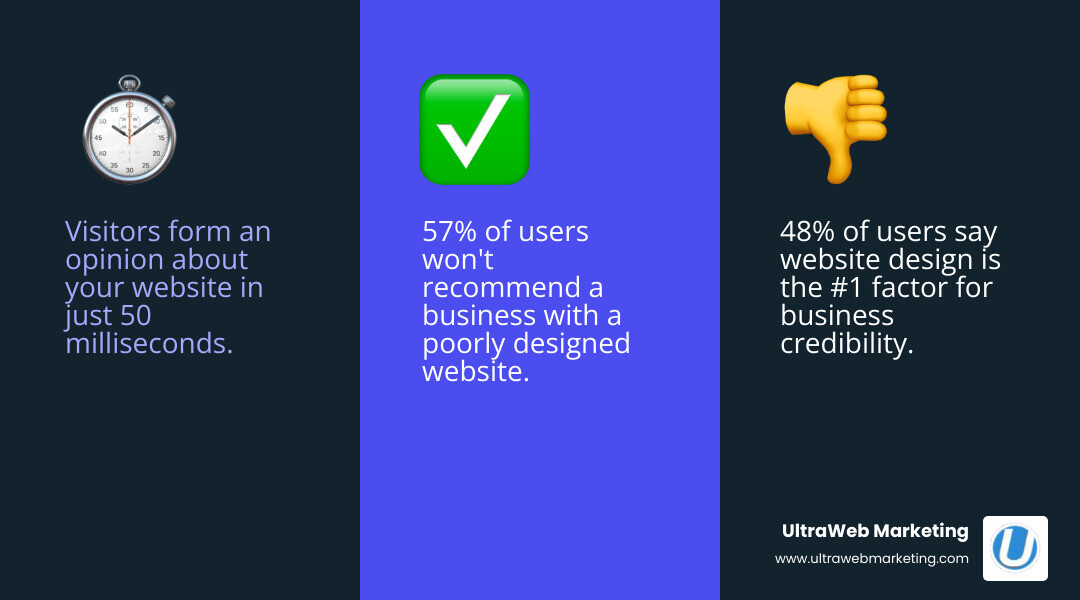
Website design for ecommerce is the foundation that determines whether your online store thrives or fails in today’s competitive digital marketplace. Research shows it takes just 50 milliseconds for visitors to form an opinion about your website – and that split-second judgment directly impacts your sales.
Here are the key elements of effective ecommerce website design:
- Trust signals – SSL certificates, security badges, clear contact info, and professional branding
- Visual appeal – High-quality product photos, consistent colors, and clean typography
- Mobile responsiveness – Seamless experience across all devices (mobile commerce will reach 62% by 2027)
- Intuitive navigation – Easy-to-find products with clear categories and search functionality
- Streamlined checkout – Simple, secure payment process with multiple options
- Social proof – Customer reviews, testimonials, and user-generated content
- Fast loading speeds – Optimized images and performance for better user experience
The stakes couldn’t be higher. 48% of internet users say website design is the most important factor in deciding whether a business is credible, while 57% won’t recommend a company with a poorly designed website.
For businesses in Boca Raton, Delray Beach, and across South Florida competing in the digital space, these design principles can mean the difference between a thriving online store and one that struggles to convert visitors into customers.
I’m Damon Delcoro, founder of UltraWeb Marketing, and I’ve helped grow our in-house ecommerce business “Security Camera King” to over $20 million annually through strategic website design for ecommerce. My team and I have consistently delivered conversion-focused designs that help local businesses achieve 300%+ ROI on their marketing investments.
Explore more about Website design for ecommerce:
#1: Build a Foundation of Trust and Credibility
When someone lands on your ecommerce site, they’re making a split-second decision about whether to trust you with their money. It’s that simple – and that crucial.
The numbers don’t lie: 48% of internet users say design is the #1 factor for credibility, while 57% won’t recommend a business with a poor website design. This means your website design for ecommerce isn’t just about looking pretty – it’s about building the foundation that turns skeptical visitors into confident customers.
Website security should be your starting point. Every customer who enters their credit card information needs to feel completely safe doing so. An SSL certificate encrypts all data between your site and your customers, and that little padlock icon in the browser instantly signals security. Beyond that, displaying security badges from trusted providers like Norton or McAfee gives visitors that extra peace of mind they’re looking for.
Clear contact information might seem obvious, but you’d be surprised how many businesses bury this crucial trust signal. Your phone number, email address, and physical location should be easy to find – not just on a contact page, but in your website footer too. When customers see you’re a real business with real people behind it, their comfort level jumps immediately.
Here’s something many Boca Raton and Delray Beach businesses overlook: detailed return policies. When customers know exactly how returns work – and that the process won’t be a nightmare – they’re much more likely to make that first purchase. Make your return policy easy to understand and even easier to find.
Professional branding ties everything together. Your logo, colors, fonts, and overall visual style should work together to create a cohesive, polished experience. Think of it as dressing for success – when your brand looks professional and established, customers naturally assume your products and service will be too.
At UltraWeb Marketing, we’ve seen how these trust-building elements transform struggling ecommerce sites into conversion machines. Our approach to building credible, trustworthy websites has helped businesses across South Florida, from Fort Lauderdale to West Palm Beach, achieve remarkable results. You can learn more about our commitment to client success and our proven track record by visiting our company page.
Trust isn’t built overnight, but with the right design foundation, it can be established in those critical first 50 milliseconds when someone finds your store.
#2: Create a Visually Compelling & Branded Experience
Think of your ecommerce website as your digital storefront window. Just like a physical store, you have seconds to capture attention and make visitors want to step inside. This is where website design for ecommerce transforms from functional necessity into sales-driving artistry.
Your brand identity should tell a story the moment someone lands on your homepage. Every element – from your consistent color palette to your legible typography – works together to create an emotional connection with your customers. The smart use of white space isn’t just about looking clean; it guides the eye naturally toward your products and call-to-action buttons.
But here’s where many South Florida businesses, from Boca Raton to Miami, miss the mark: they underestimate the power of professional visuals. Research from VWO shows that images can improve conversion rates significantly, making quality photography and video one of your strongest sales tools.
High-quality product photography does more than just show what you’re selling – it builds confidence. When customers can see crisp, detailed images from multiple angles, they feel like they’re examining the product in person. This is especially crucial for online shoppers who can’t physically touch your merchandise before buying.
Lifestyle images take this a step further by helping customers envision your products in their own lives. Instead of just showing a watch on a white background, show it on someone’s wrist as they’re enjoying a Delray Beach sunset. These images tap into emotions and aspirations, turning browsers into buyers.
Don’t overlook product videos either. A short video demonstrating how your product works or showing its scale can answer questions that even the best photos can’t. Videos create engagement and trust – two essential ingredients for online sales success.
The magic happens when all these visual elements work together seamlessly. Your brand colors should complement your product photography. Your typography should be readable on both desktop and mobile. Every image should feel like it belongs to the same family, creating a cohesive experience that builds confidence with every click.
At UltraWeb Marketing, we’ve seen how powerful visual branding can transform struggling ecommerce sites into conversion machines. You can see examples of our approach in Our Web Design Portfolio, where we showcase how strategic design choices drive real business results.

#3: Master User Experience with Flawless Navigation & Responsive Design
Your website design for ecommerce can look stunning, but if customers can’t steer it smoothly, you’re losing sales. Think of user experience as the invisible bridge between a visitor’s interest and their purchase decision. When that bridge is solid, customers flow naturally from browsing to buying. When it’s shaky, they abandon ship.
At UltraWeb Marketing, we’ve seen how mastering navigation and responsive design transforms struggling online stores into conversion machines. Our UI/UX Design Services focus on creating these seamless user journeys that keep customers engaged and moving toward checkout.
Prioritize Mobile-First, Responsive Design
Here’s a reality check that might surprise you: the average American spends 5 hours and 16 minutes on their mobile phone every day. That’s more time than most people spend watching TV! And when it comes to shopping, mobile isn’t just catching up—it’s taking over. According to Statista, mobile commerce will reach 62% of all ecommerce by 2027.
This shift means your website design for ecommerce must work flawlessly on every device, but especially on smartphones. Responsive design isn’t just about shrinking your desktop site to fit a smaller screen. It’s about creating fluid grids and flexible images that adapt intelligently to any screen size while maintaining cross-device consistency.
When someone finds your store through a Google search on their phone during their lunch break, they should have the same smooth experience as someone browsing on their laptop at home. If your site loads slowly or looks cramped on mobile, you’re essentially turning away more than half your potential customers. That’s why we always start with mobile-first design—if it works perfectly on a phone, it’ll shine on larger screens too.
For deeper insights into why this matters so much for your business, check out Why a Mobile-Friendly Website is Important.
Implement Clear Site Navigation and Optimize for Speed
Navigation is your customer’s roadmap to purchase. Intuitive menus should guide visitors naturally toward what they’re seeking, while breadcrumbs help them understand exactly where they are in your store’s hierarchy. Nobody wants to feel lost while shopping.
Smart search functionality and product filtering options transform overwhelming product catalogs into personalized shopping experiences. When customers can quickly narrow down choices by size, color, price, or features, they’re more likely to find exactly what they want—and buy it.
But here’s where many businesses stumble: page speed. Remember those crucial 50 milliseconds we talked about? Slow-loading pages kill conversions faster than anything else. We optimize speed through image optimization techniques that maintain quality while dramatically reducing file sizes, fast hosting solutions that keep your site running smoothly, and clean, efficient code that loads lightning-fast.
Search engines love fast, user-friendly sites too. Google rewards businesses that prioritize user experience with higher rankings, which means more organic traffic. Our SEO for Online Retailers services help ensure your site performs beautifully for both customers and search engines.
Simplify the Checkout Process
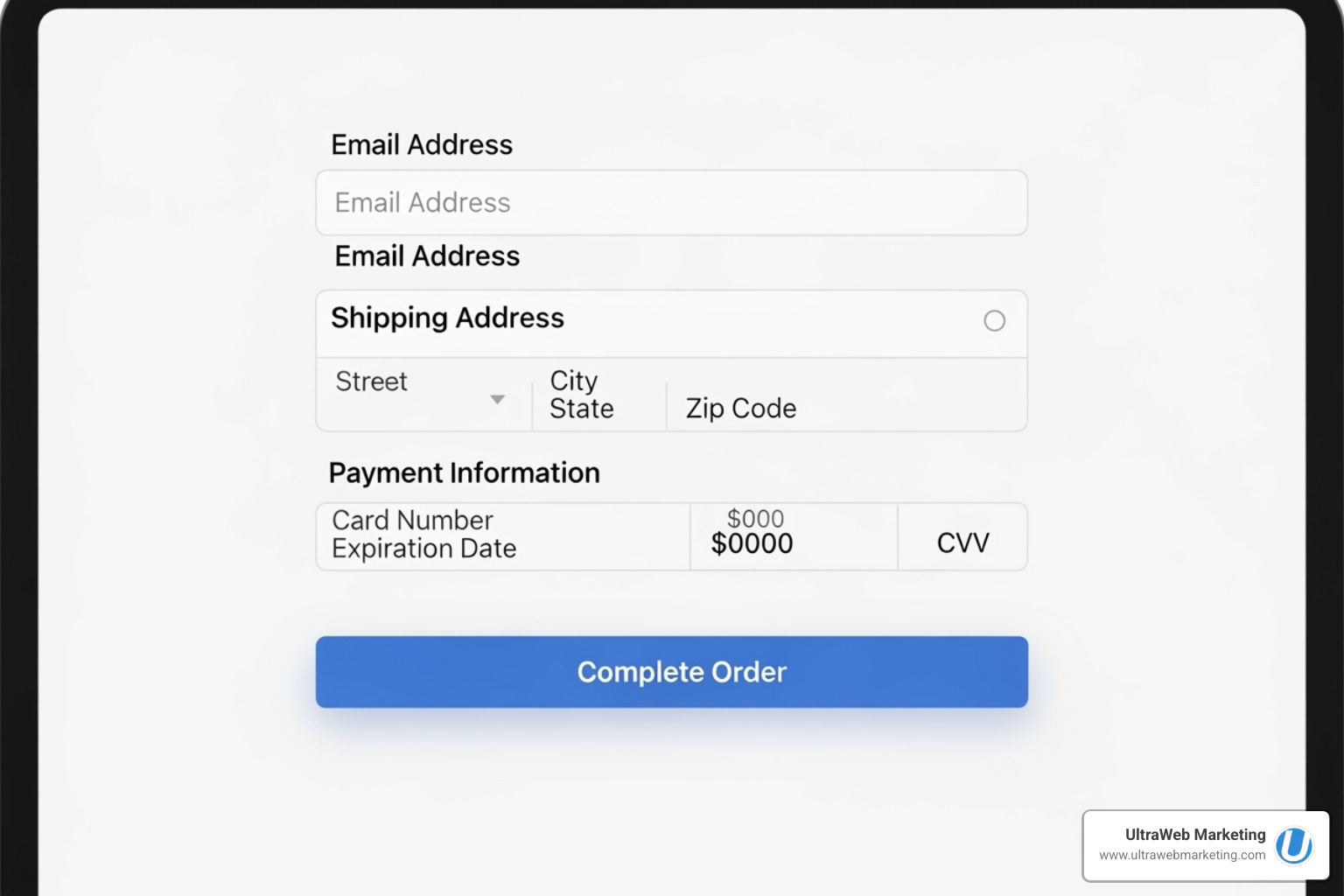
You’ve done the hard work of attracting customers and getting them interested in your products. Don’t lose them at the finish line with a complicated checkout process. Research from the Baymard Institute shows that 10% of customers abandon their carts simply because they don’t see their preferred payment method available.
The solution? Make checkout as frictionless as possible. Guest checkout options let first-time buyers complete their purchase without creating an account—you can always invite them to register afterward. Progress indicators show customers exactly where they are in the process, reducing anxiety about how many more steps remain.
Offering multiple payment options isn’t just nice to have—it’s essential. Credit cards, PayPal, Apple Pay, Google Pay, and “Buy Now, Pay Later” options cater to different customer preferences. The more options you provide, the fewer customers you’ll lose to payment friction.
Finally, keep form fields to the absolute minimum. Every extra field you ask customers to fill out is another opportunity for them to second-guess their purchase. Ask only for what you truly need to complete the transaction and ship the product.
#4: Leverage Social Proof and Personalization to Drive Sales
In today’s digital marketplace, your potential customers are looking for validation before they hit that “buy” button. They want to know that others have had great experiences with your products, and they expect a shopping experience that feels custom just for them. This is where social proof and personalization become game-changers in your website design for ecommerce.
Customer reviews and testimonials are pure gold for building trust with new visitors. When shoppers see real feedback from previous buyers, it dramatically reduces their purchase anxiety. Think about it – would you rather buy from a site with no reviews or one where hundreds of happy customers have shared their experiences?
The key is integrating these reviews strategically throughout your site. Product pages should showcase customer feedback prominently, while your homepage can feature rotating testimonials that highlight your best customer experiences. Some of our most successful clients have seen conversion rate increases of 20% or more just by better showcasing their customer reviews.
User-generated content takes social proof to the next level. When customers share photos or videos of themselves using your products, it creates authentic, relatable content that resonates with other shoppers. This type of content is incredibly powerful because it shows your products in real-world situations, helping potential customers visualize themselves making the purchase.
The personalization side of the equation is where technology really shines. AI-powered recommendations can transform a generic browsing experience into something that feels custom-built for each visitor. When someone visits your site, smart algorithms can analyze their behavior and suggest products they’re most likely to love.
Dynamic content goes even further, showing different promotions, featured products, or even messaging based on factors like location, browsing history, or the time of day. A visitor from Boca Raton might see different content than someone from Miami, creating a more relevant and engaging experience.
These personalization features don’t just improve the customer experience – they directly impact your bottom line. Personalized product recommendations can increase average order values by 10-30%, while dynamic content keeps visitors engaged longer and more likely to convert.
At UltraWeb Marketing, we understand how to weave these elements seamlessly into your website design for ecommerce. Our team can help you implement review systems, create strategies for encouraging user-generated content, and set up AI-powered personalization that makes every visitor feel like your site was built just for them.
We also offer comprehensive Reputation Management Services to ensure your customer reviews are working as hard as possible to drive new sales. After all, great reviews don’t just happen – they’re the result of exceptional service and smart digital strategy working together.
#5: Choose the Right Platform & Avoid Common Pitfalls
Choosing the right ecommerce platform is like picking the foundation for your dream home – it affects everything you’ll build on top of it. Your platform decision impacts design flexibility, scalability, SEO capabilities, and how well your site can grow with your business.
When evaluating platforms, consider your current needs alongside future growth plans. A small boutique in Delray Beach might start with a simple solution, but if you plan to expand your product line or add complex features, you’ll want a platform that can handle that growth without requiring a complete rebuild.
Scalability should be at the top of your priority list. Can the platform handle increased traffic during peak seasons? Will it support hundreds or thousands of products as you expand? SEO features are equally crucial – your platform should offer clean URL structures, customizable meta tags, and fast loading speeds that help you rank well in Google searches.
Customization capabilities determine how unique your website design for ecommerce can be. Some platforms offer drag-and-drop simplicity but limited customization, while others provide extensive flexibility but require more technical expertise. The key is finding the sweet spot that matches your technical comfort level and design ambitions.
For detailed guidance on making this critical decision, explore our Ecommerce Development Demystified: A Complete Guide.
Common Mistakes in Website design for ecommerce to Avoid
Even experienced business owners can fall into design traps that sabotage their online success. I’ve seen countless South Florida businesses struggle with preventable issues that directly impact their bottom line.
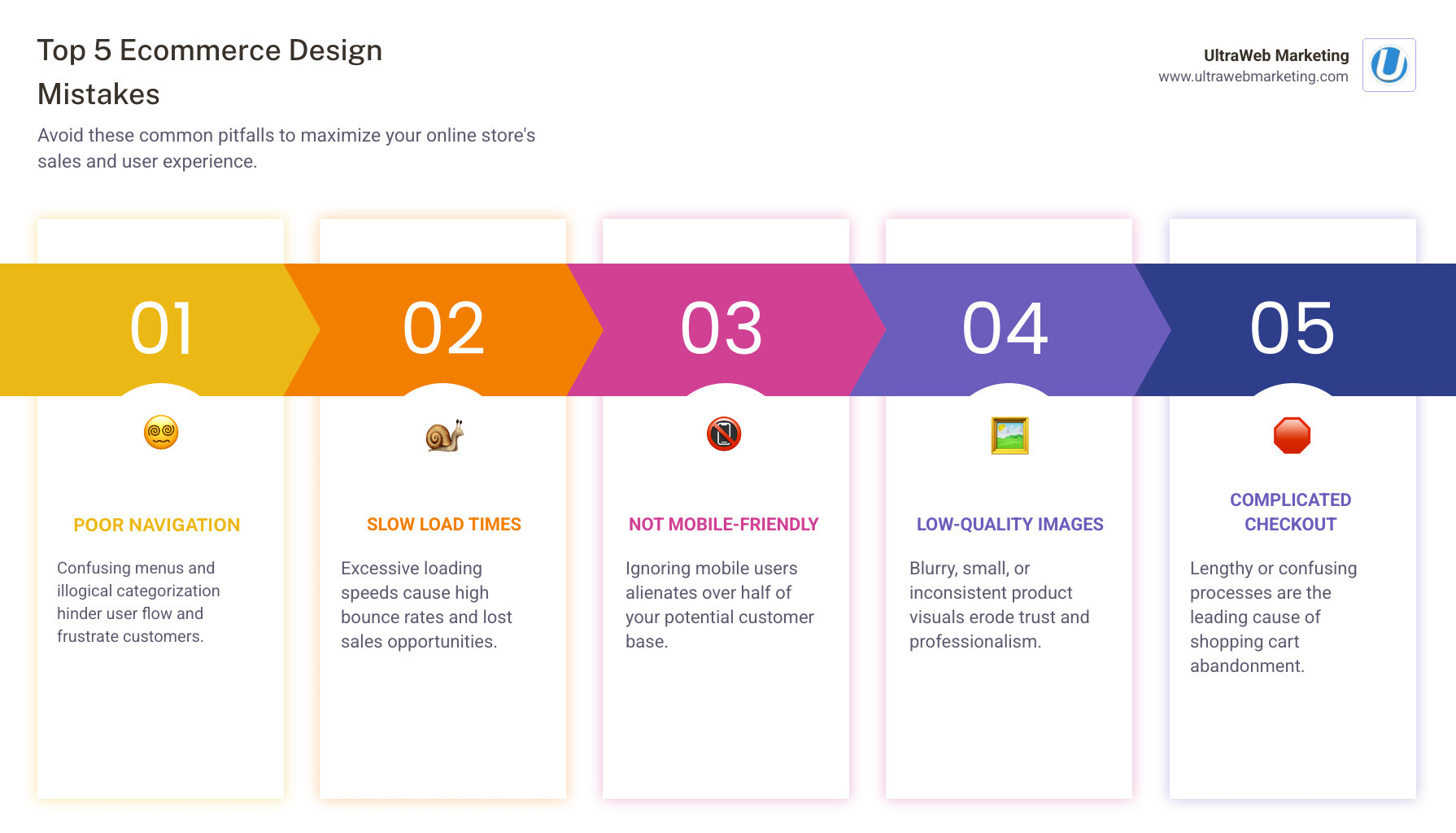
Poor navigation is perhaps the most frustrating mistake. When customers can’t find what they’re looking for, they leave – it’s that simple. Your menu structure should be logical, your search function should actually work, and product categories should make sense to your customers, not just to you.
Slow load times continue to plague many ecommerce sites. You have just 50 milliseconds to make a good impression. Every second of delay can cost you sales. Non-mobile-friendly design is equally damaging, especially when mobile commerce is racing toward 62% of all online sales.
Low-quality images instantly undermine your credibility. Blurry, small, or inconsistent photos make your products look cheap, regardless of their actual quality. Your images are doing the heavy lifting that a physical store’s displays would handle.
The complicated checkout process remains a conversion killer. Each additional step or required field gives customers another reason to abandon their cart. Hidden shipping costs that surprise customers at the final step destroy trust instantly – transparency builds loyalty.
Finally, lack of social proof leaves new customers wondering if they can trust you. Reviews, testimonials, and trust badges aren’t just nice additions – they’re essential credibility builders, especially for newer businesses establishing themselves in competitive markets like Boca Raton.
Key Differences in Designing for B2B vs. B2C
Understanding whether you’re selling to businesses or consumers fundamentally shapes your website design for ecommerce approach. The psychology behind these purchases couldn’t be more different.
B2C customers often buy with their hearts first, then justify with their heads. They’re influenced by beautiful imagery, aspirational lifestyle content, and emotional triggers. Their checkout process should be lightning-fast – think Amazon’s one-click purchasing. They want to buy now, while the excitement lasts.
B2B buyers approach purchases differently. They’re spending company money, often need approval from others, and must justify their decisions with logic and ROI. Your design should emphasize clear product specifications, detailed technical information, and cost-effectiveness rather than emotional appeal.
The checkout complexity varies dramatically between these audiences. B2C customers prefer simple, guest checkout options that get them to purchase quickly. B2B customers often need complex checkout processes that accommodate purchase orders, credit terms, multi-user account access, and approval workflows.
Customer-specific pricing becomes crucial in B2B scenarios. Your platform must handle bulk ordering capabilities, volume discounts, and potentially different pricing tiers for different customers. This requires more sophisticated backend functionality than typical B2C operations.
Relationship building takes on different meanings too. B2C focuses on brand loyalty and repeat purchases through email marketing and social media engagement. B2B emphasizes account management, easy reordering systems, and direct communication channels with sales representatives.
Whether you’re targeting consumers or businesses throughout Florida, our team provides Ecommerce Solutions for Florida Businesses custom to your specific audience and goals.
Frequently Asked Questions about Ecommerce Website Design
When it comes to website design for ecommerce, business owners in South Florida often have similar questions and concerns. Let me address the most common ones we hear at UltraWeb Marketing, drawing from our years of experience helping local businesses build successful online stores.
What are the essential elements of a successful ecommerce website design?
A truly successful website design for ecommerce goes far beyond just looking attractive – it’s about creating a seamless experience that turns visitors into buyers. The foundation starts with high-quality visuals that showcase your products clearly. Think crisp product photography from multiple angles and engaging lifestyle images that help customers envision themselves using your products.
Intuitive navigation is equally crucial. Your customers should never feel lost or confused when browsing your site. This means clear category structures, effective search functionality, and breadcrumb trails that show users exactly where they are.
The technical side matters just as much. Mobile-first responsiveness ensures your site works flawlessly on smartphones and tablets, while fast page load speeds prevent the dreaded bounce that happens when sites take too long to load. You have just 50 milliseconds to make a good impression.
Finally, trust signals like customer reviews, security badges, and clear return policies build the confidence customers need to complete their purchases. A streamlined checkout process with multiple payment options seals the deal without creating unnecessary friction.
How can I improve my ecommerce website’s SEO?
Improving your ecommerce site’s search engine visibility requires a multi-layered approach that combines technical optimization with compelling content. Start with the technical foundations – ensure your site loads quickly and provides an excellent mobile experience, as these are critical ranking factors Google considers.
Content optimization is where the magic happens. Your product descriptions should include relevant keywords naturally, while maintaining clear, compelling copy that actually helps customers make decisions. Don’t forget about your images – using descriptive alt text helps search engines understand your visual content.
Site structure plays a huge role too. A logical hierarchy with proper internal linking helps search engines crawl and understand your content. Beyond your product pages, maintaining a blog with valuable, industry-related content can drive significant organic traffic to your site.
At UltraWeb Marketing, our Ecommerce SEO Strategies have helped countless South Florida businesses climb the search rankings and attract more qualified customers.
How much does it cost to build a professional ecommerce website?
The investment in professional website design for ecommerce varies significantly based on your specific needs, desired features, and level of customization. While DIY platforms might seem appealing with their lower monthly fees, they often lack the sophisticated functionality and professional polish that drives serious sales growth.
A custom, professionally designed ecommerce site is really an investment in your brand’s future success. You’re not just paying for a website – you’re investing in a powerful sales tool that works around the clock to grow your business.
At UltraWeb Marketing, we understand that every business has different needs and budgets. That’s why we create custom packages custom to your specific goals and financial considerations. Our comprehensive online marketing plans, which can include professional ecommerce website design, start as low as $279 per month. This ensures you get a conversion-focused, SEO-optimized solution that delivers real results without straining your budget.
The key is finding a partner who understands both the technical aspects of ecommerce and the unique challenges facing businesses in Boca Raton, Delray Beach, and throughout South Florida.
Get Your High-Converting Ecommerce Website in Boca Raton
The journey through effective website design for ecommerce brings us to one undeniable truth: your online store’s success hinges on professional design that converts visitors into customers. From building trust through security badges and SSL certificates to creating mobile-responsive experiences that work flawlessly across all devices, every element we’ve discussed works together to drive sales and build your brand.
Here in South Florida, businesses face unique opportunities and challenges in the digital marketplace. Whether you’re launching your first online store in Boca Raton, expanding your reach to customers in Delray Beach and Deerfield Beach, or competing with established players throughout the region, your website design can be the differentiator that sets you apart.
At UltraWeb Marketing, we’ve spent over a decade helping local companies not just get online, but thrive online. Our approach to website design for ecommerce goes beyond creating something that looks good – we build conversion-focused platforms that turn browsers into buyers. We understand that scalability matters, that SEO features are non-negotiable, and that customization needs vary dramatically between B2B and B2C businesses.
The investment in professional ecommerce design pays dividends that compound over time. A well-designed site doesn’t just increase immediate sales; it builds brand credibility, improves search engine rankings, and creates the foundation for all your future digital marketing efforts. Our online marketing plans start as low as $279 per month, making professional website design for ecommerce accessible for businesses ready to compete seriously online.
Don’t let another day pass with a website that’s holding your business back. The competitive landscape in South Florida demands excellence, and your customers expect nothing less than a seamless, trustworthy shopping experience.
Ready to transform your online presence? Visit Web Design Boca Raton to see how we approach ecommerce design differently, or Contact UltraWeb Marketing for a Free Quote to discuss your specific vision and goals. Let’s build an ecommerce website that doesn’t just meet your expectations – it exceeds them.